Not every story of wealth begins with receiving more. Black Jambhala begins with what must be confronted: fear, debt, obstruction, and the habits that keep scarcity in place.
Origins and tradition
Jambhala developed from the Indian wealth guardian Kubera and appears in several colors and ritual traditions. Yellow Jambhala is regal and expansive; Black Jambhala is more forceful, linked in Tibetan practice with rapid obstacle-clearing and protection for those facing severe material hardship. His dark color does not mean evil. In tantric art, black can signify an activity so decisive that it absorbs and stops harmful forces.
The story behind the symbol
Traditional accounts connect Black Jambhala with compassionate wrath—the fierce energy a protector uses when gentle persuasion is no longer enough. A parent pulling a child from danger may look angry while acting from love. In the same way, his terrifying expression turns toward greed, exploitation, and the paralysis created by poverty, not toward the person seeking help.

How to recognize this figure
He is usually dark blue or black, compact and powerful, with one face and two hands. A mongoose releasing jewels identifies him as a wealth deity; a ritual cup and surrounding flames emphasize transformation. Details vary by lineage, so color, posture, and hand objects should be read together rather than treated as a universal code.
What blessings are traditionally associated?
Devotees traditionally seek relief from poverty, debt, theft, and obstacles to livelihood. The symbolism does not excuse gambling or reckless promises of instant riches. Read ethically, his blessing supports disciplined repair: seeing the numbers clearly, stopping leaks, asking for help, earning honestly, and protecting resources from exploitation.
Who might wear this symbol?
Black Jambhala may resonate with someone rebuilding after financial loss, ending a cycle of scarcity, or setting firmer boundaries around money. Wear him as a reminder that prosperity sometimes begins with subtraction—removing the pattern that prevents good resources from staying.
Cultural note: interpretations vary across Buddhist lineages and local communities. This introduction explains traditional symbolism and does not promise supernatural, medical, or financial results.
Carry This Symbol
Explore pieces featuring the figure from this story.
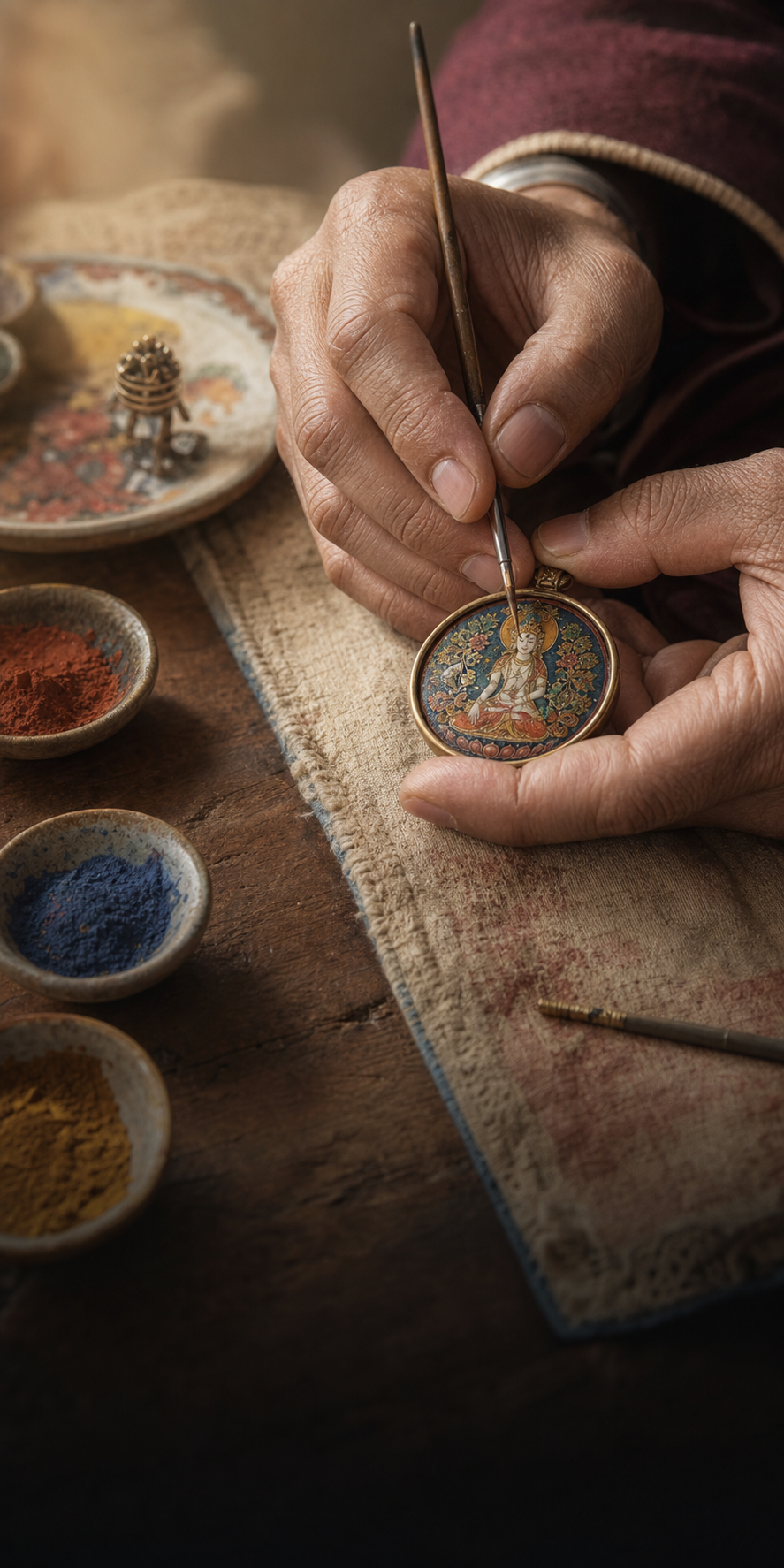
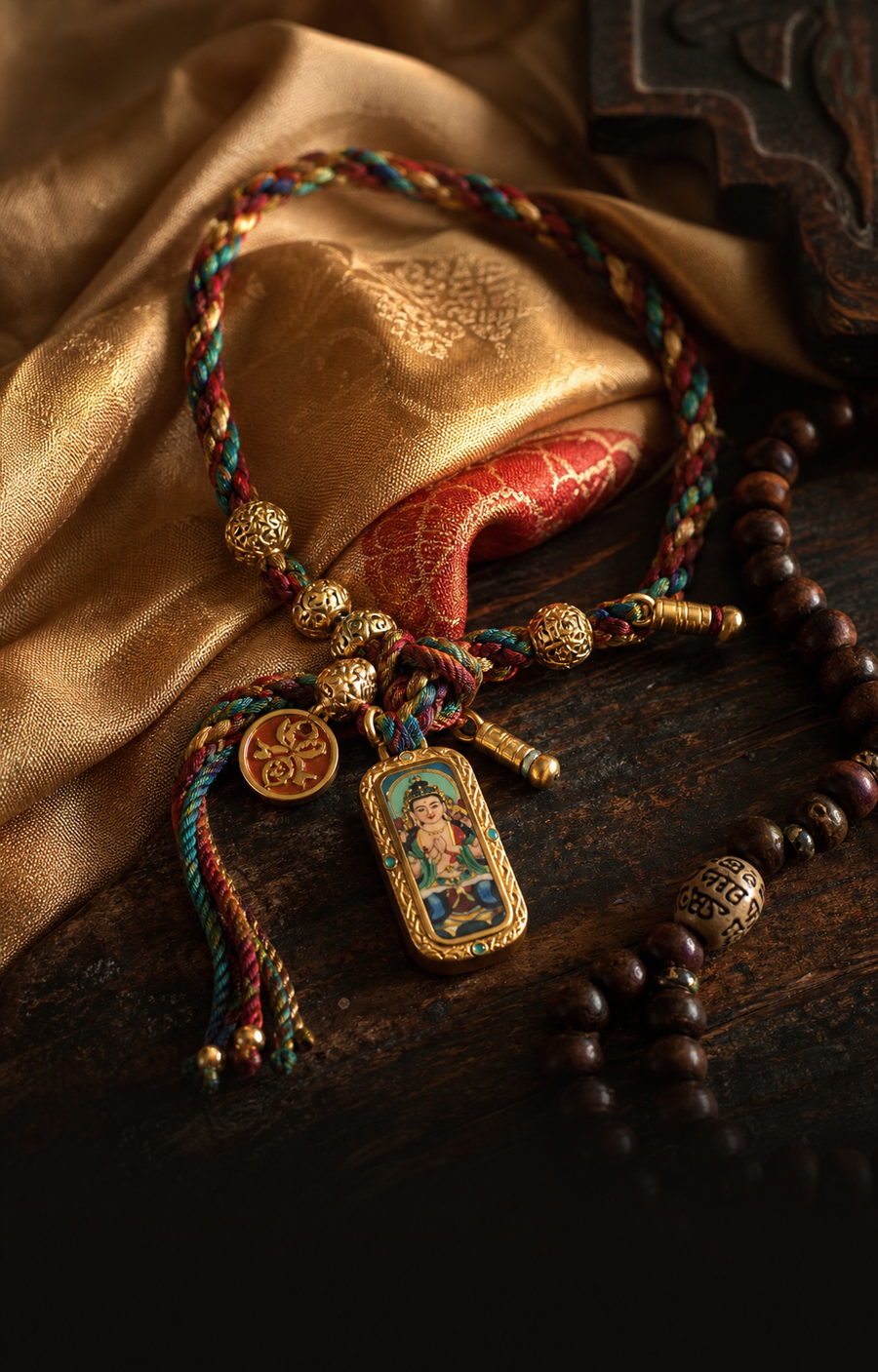
 Black Jambhala — Hand-Painted Thangka Pendant, Full Color (2D)
 Vajra Black Wealth Deity — Hand-Carved Leather Thangka Pendant
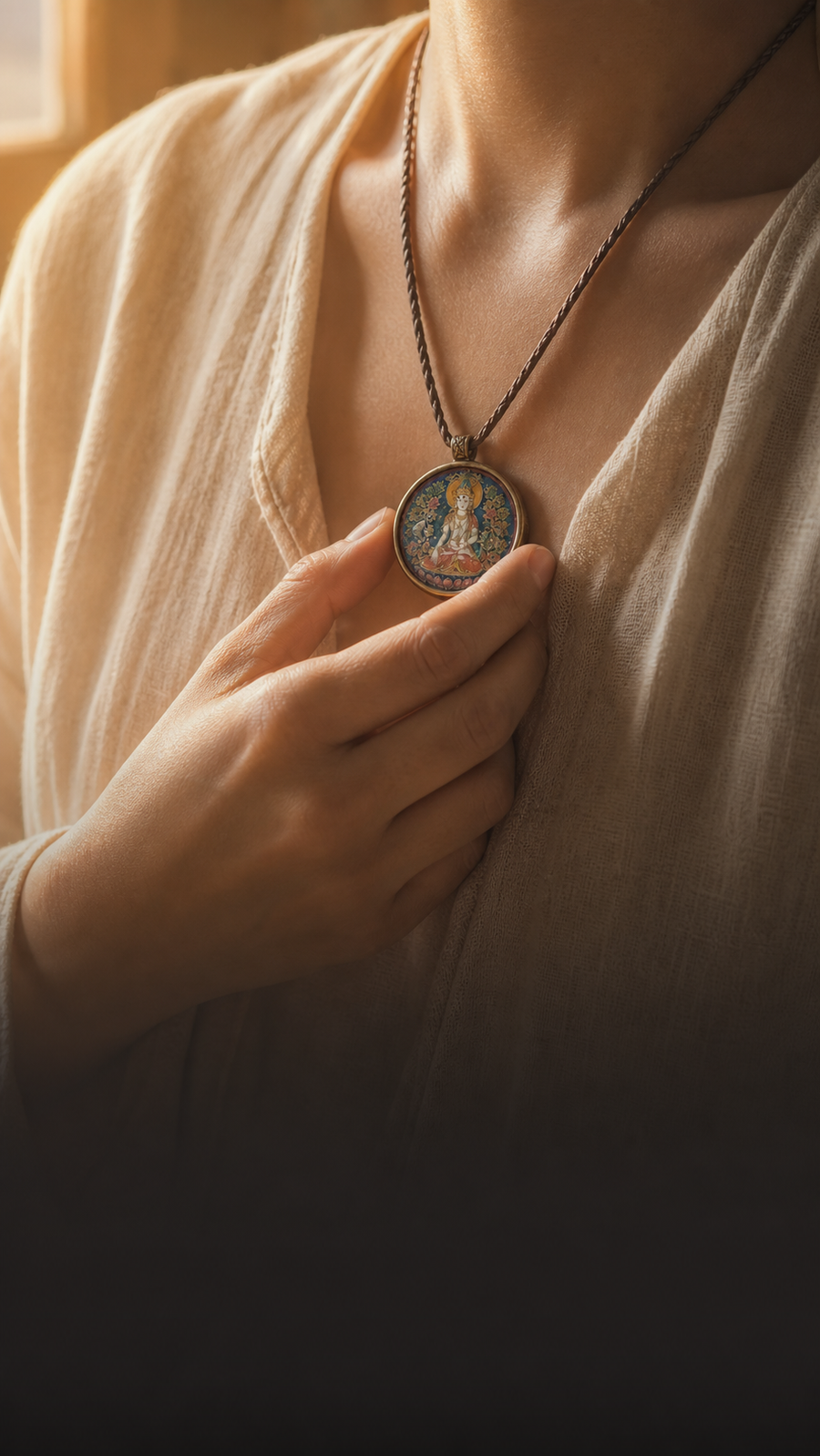
Wear the Symbol