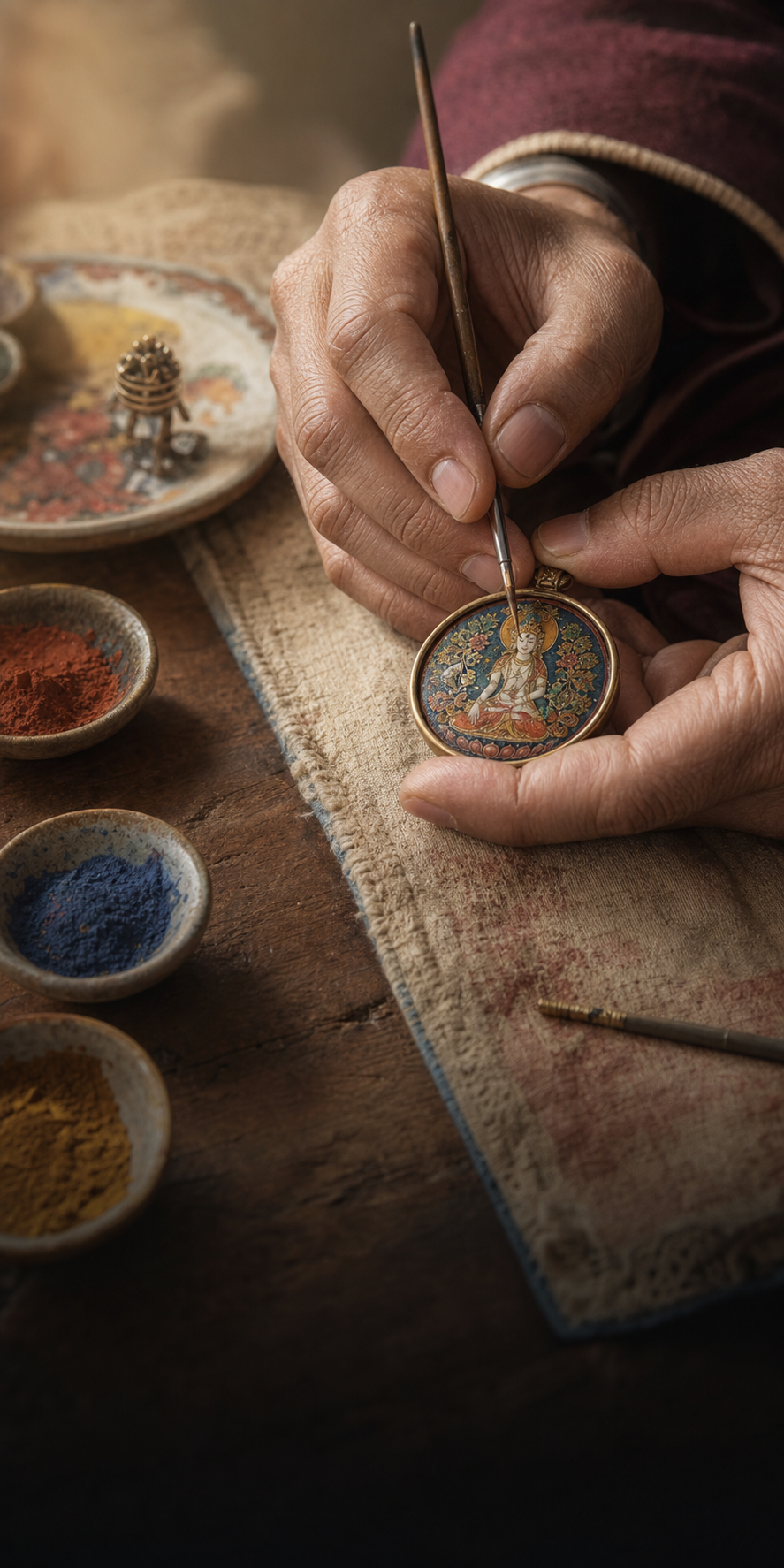
At Eastern Luck, the most important part of a painted pendant happens before it becomes jewelry. At a crowded worktable, pigments are mixed in small bowls and a miniature image is built slowly with a fine brush. The scale may be tiny; the work is not.
A painting measured in millimeters
Thangka is a Himalayan painting tradition recognized for ordered composition, precise linework, and saturated color. Translating that visual language into a wearable pendant changes the scale but not the need for control. A face, hand, flower, border, and field of color must remain legible inside a surface held between two fingers.
Why small variations matter: hand-painting does not produce identical copies. A line may be slightly finer, a blue slightly deeper, or a gold accent placed with a different pressure. These are signs of the hand involved—not defects to be digitally erased.
Two ways the image takes form
The image is painted across a flatter face. The result is slimmer, crisp from the front, and easy to wear every day.
A molded relief gives the figure physical depth before color is applied. Raised surfaces catch light and make the piece feel more sculptural.
From the worktable to the cord
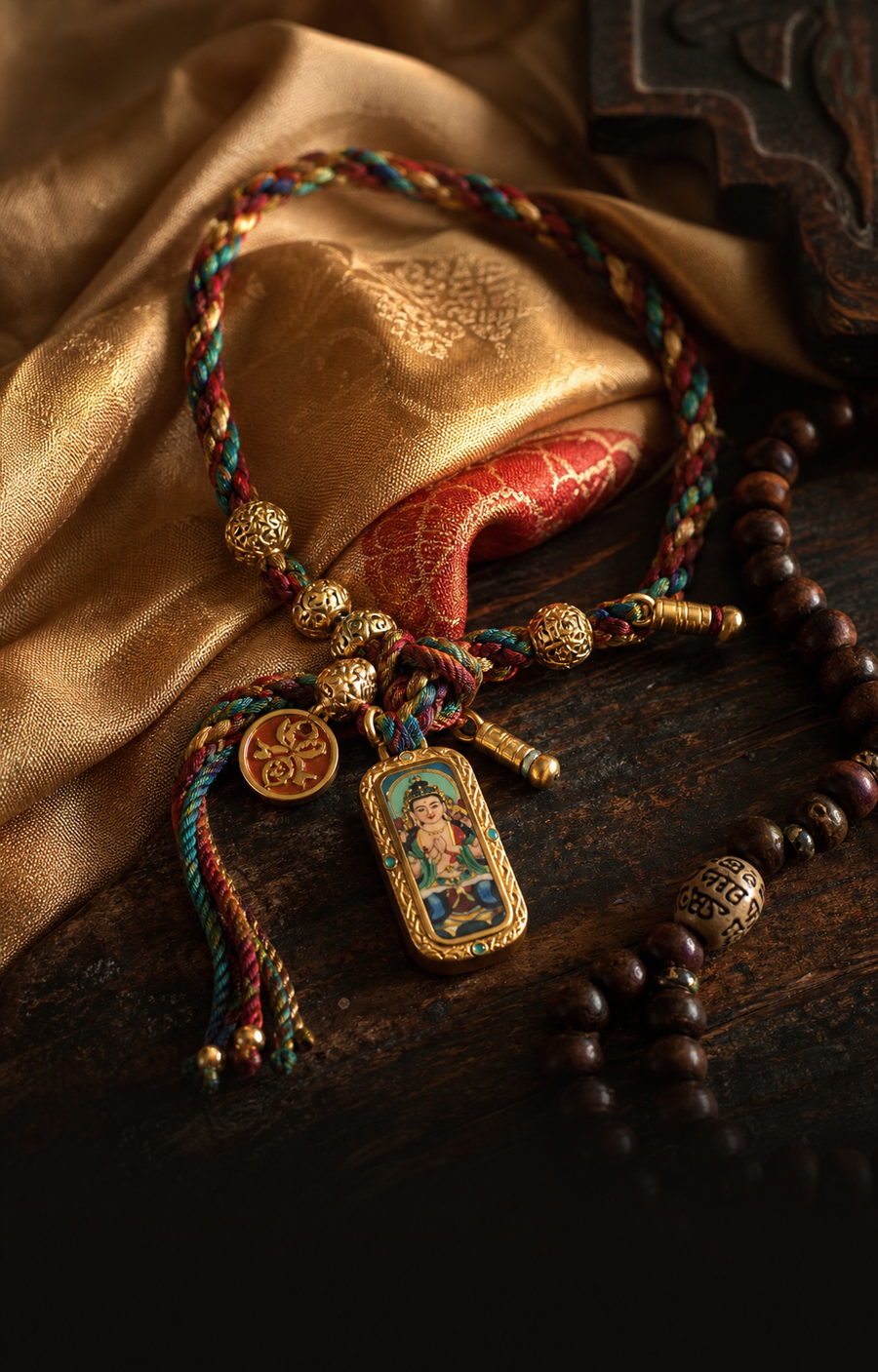
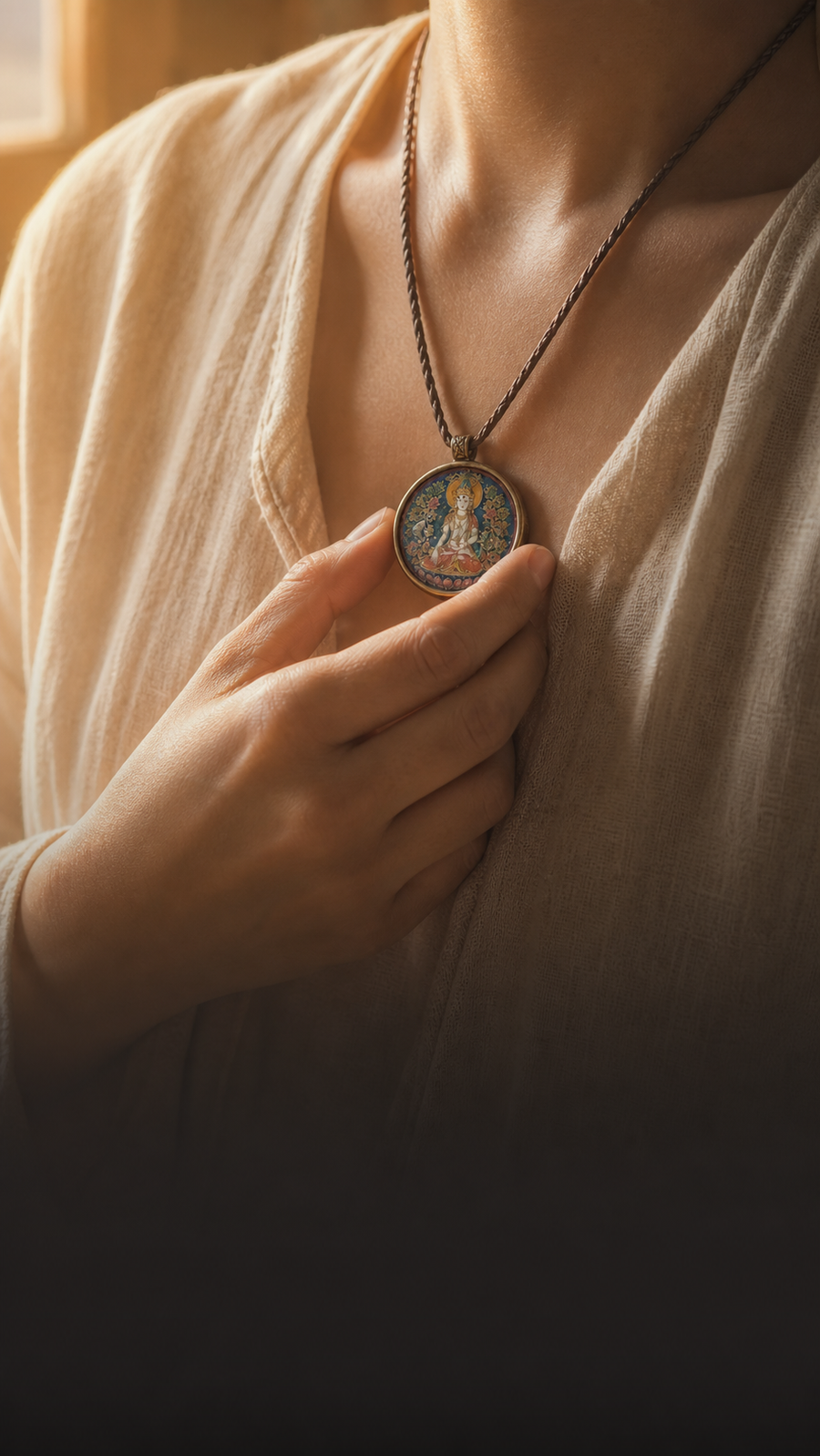
After painting, the miniature is set into its pendant frame. The frame protects the artwork and gives it weight; the cord determines how it sits and moves when worn. We offer both separately so the pendant can be paired with a simple woven cord, gemstone beads, or a more decorative chain.
Care is intentionally simple: keep the painted face dry, avoid perfume and hard knocks, and store the pendant separately when it is not being worn.
Compare 2D painted detail with 3D relief, then choose the cord that makes it yours.
Explore Thangka pendants