A relief pendant changes as it moves. Light catches the raised crown first, then a painted face, lotus edge, or line of gold. That shifting light gives a miniature image its physical presence.
What “relief” means
Relief is an image built above its background instead of drawn only on a flat plane. The face, robes, halo, and symbolic attributes are modeled into shallow three-dimensional forms before color is added. The result sits between painting and sculpture.
 Green Tara — Hand-Painted Tsatsa Thangka Pendant, Deluxe (3D Relief)View pendant →
 Medicine Buddha — Hand-Painted Tsatsa Thangka Pendant, Deluxe (3D Relief)View pendant →
The Tsatsa connection
Tsatsa traditionally refers to small molded Buddhist images, often made from clay as devotional objects or offerings. Contemporary Tsatsa-inspired jewelry translates that intimate scale and modeled surface into wearable form. Materials vary, so the term describes a craft lineage and visual structure rather than claiming every piece was made for ritual use.
 Yellow Jambhala — Hand-Painted Tsatsa Relief Thangka PendantView pendant →
 Manjushri — Hand-Painted Tsatsa Relief Thangka PendantView pendant →
Why hand-applied color looks different
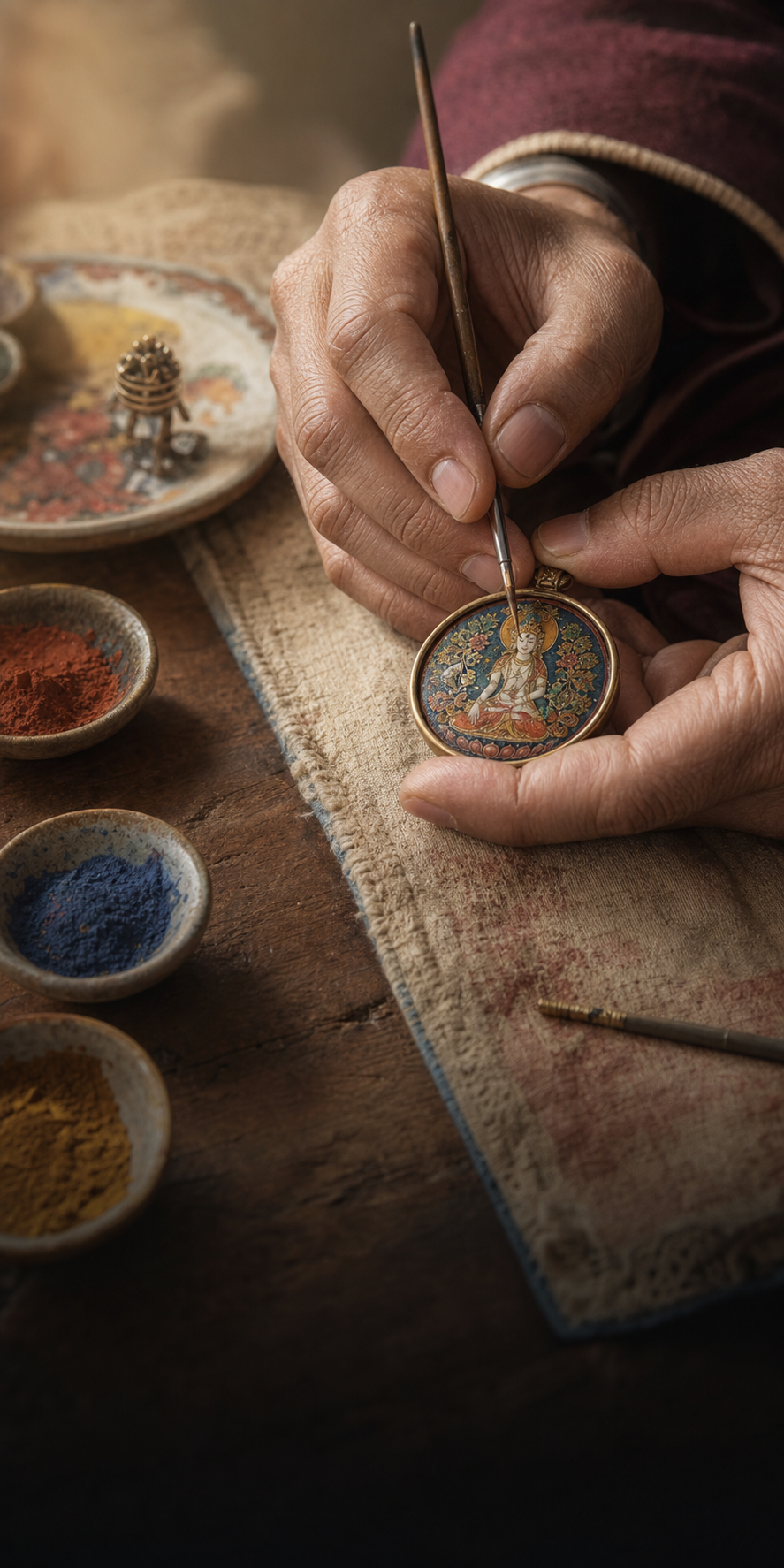
Raised areas interrupt the brush, recesses collect pigment, and the face must remain readable at a scale smaller than a thumbnail. Small variations in line, shading, and color placement are normal in hand-finished work. They are part of what prevents the surface from feeling mechanically printed.
 Palden Lhamo — Hand-Painted Tsatsa Relief Thangka PendantView pendant →
 Green Tara — Hand-Painted Tsatsa Relief Thangka PendantView pendant →
Flat color versus sculpted depth
A full-color 2D pendant is slimmer and reads clearly from a distance. Relief creates stronger shadow, tactile depth, and a more object-like presence. The comparison below shows why the same symbolic figure can feel different in each construction.
 Yellow Jambhala — Hand-Painted Thangka Pendant, Full Color (2D)View pendant →
 Yellow Jambhala — Hand-Painted Tsatsa Thangka Pendant, Deluxe (3D Relief)View pendant →
Gold, shadow, and the protective front
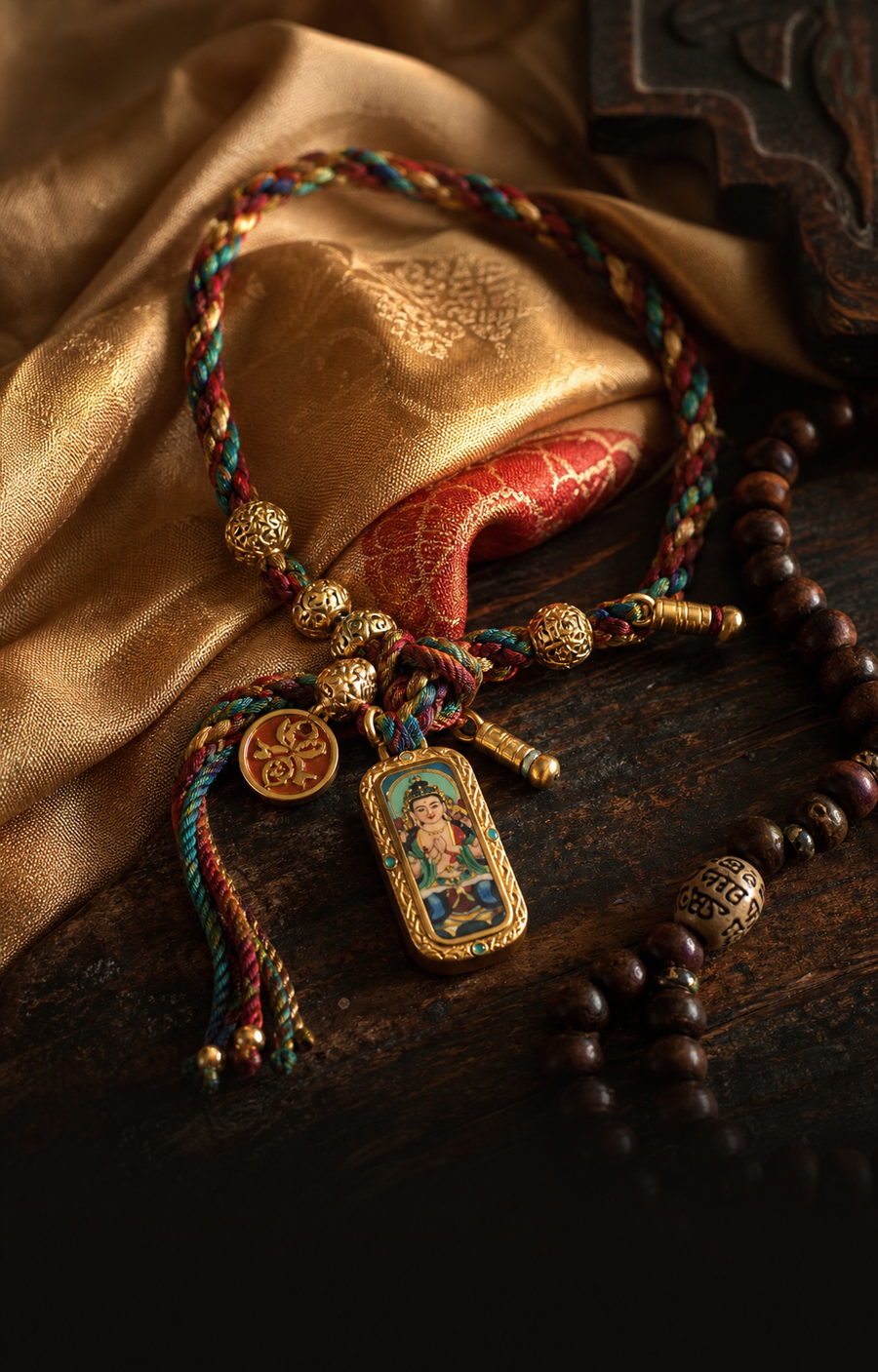
Gold-colored details work best when they describe structure: crown, halo, jewelry, and robe borders. Recessed blue or red stays darker, so depth appears without excessive glitter. A clear front protects the painted surface from dust and light abrasion, but it does not make the pendant waterproof.
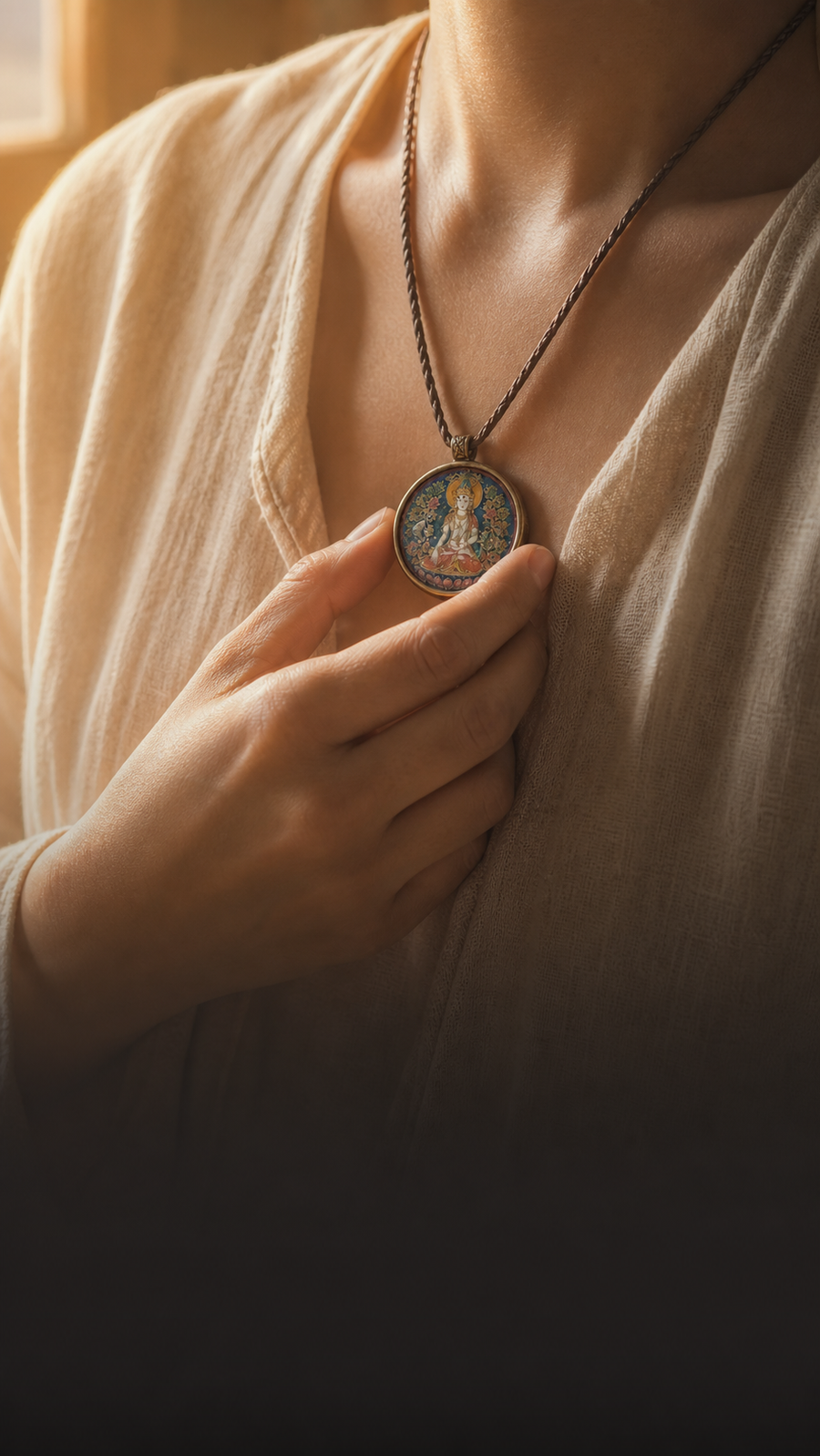
Styling note: Tilt a relief pendant under soft light before choosing. The best angle should reveal the face and attributes without strong glare from the cover.
How to care for relief work
- Wipe the exterior with a dry, soft cloth.
- Store separately to protect the cover and frame.
- Avoid water, perfume spray, solvents, and high heat.
- Hold the frame instead of pressing the painted center.
- Check the bail and cord regularly, especially on heavier pieces.
Which construction should you choose?
Choose flat color for a slimmer profile, clean graphic impact, and easy layering. Choose relief for changing light, visible texture, and a stronger sculptural presence. Choose deluxe relief when the pendant itself should be the main statement.
 Green Tara — Hand-Painted Thangka Pendant, Full Color (2D)
 Green Tara — Hand-Painted Tibetan Thangka Pendant (3D Relief)