Ksitigarbha makes a promise so large it sounds impossible: he will not complete his work until the hell realms are empty. The power of the vow lies precisely in its refusal to abandon anyone.
Origins and tradition
His Sanskrit name means Earth Treasury or Earth Store. A major figure in East Asian Mahayana Buddhism, he is known as Dizang in China and Jizo in Japan. The Ksitigarbha Bodhisattva Sutra links his path with stories of filial devotion, including a young woman whose determined practice seeks to rescue her mother from painful rebirth. Across cultures he became a companion for the dead, travelers, children, and those passing through dangerous thresholds.
The story behind the symbol
In the sutra’s best-known episodes, the bodhisattva’s earlier lives repeatedly answer suffering with vows rather than resignation. The promise to remain until the worst realm is empty makes him the guardian of places others avoid. In Japan, roadside Jizo statues became tender protectors of travelers and children, often dressed by local families in small red bibs or caps.

How to recognize this figure
Ksitigarbha is often shown as a monk with a shaved head. His ringed staff announces a traveler and, in popular interpretation, opens the gates of difficult realms. In the other hand he carries a shining cintamani, the wish-fulfilling jewel whose light enters darkness. His simple robes distinguish his grounded presence from richly crowned bodhisattvas.
What blessings are traditionally associated?
He is traditionally associated with safe passage, care for the deceased, protection of children and travelers, perseverance, and support through grief. His blessing is the courage to stay present where comfort is scarce. He does not promise an easy road; he promises companionship on it.
Who might wear this symbol?
Ksitigarbha may comfort someone grieving, caring for a vulnerable person, traveling, or committed to long work with no quick reward. Wear him as a reminder that reliability is a spiritual quality: return, listen, and do not leave simply because the path is dark.
Cultural note: interpretations vary across Buddhist lineages and local communities. This introduction explains traditional symbolism and does not promise supernatural, medical, or financial results.
Carry This Symbol
Explore pieces featuring the figure from this story.
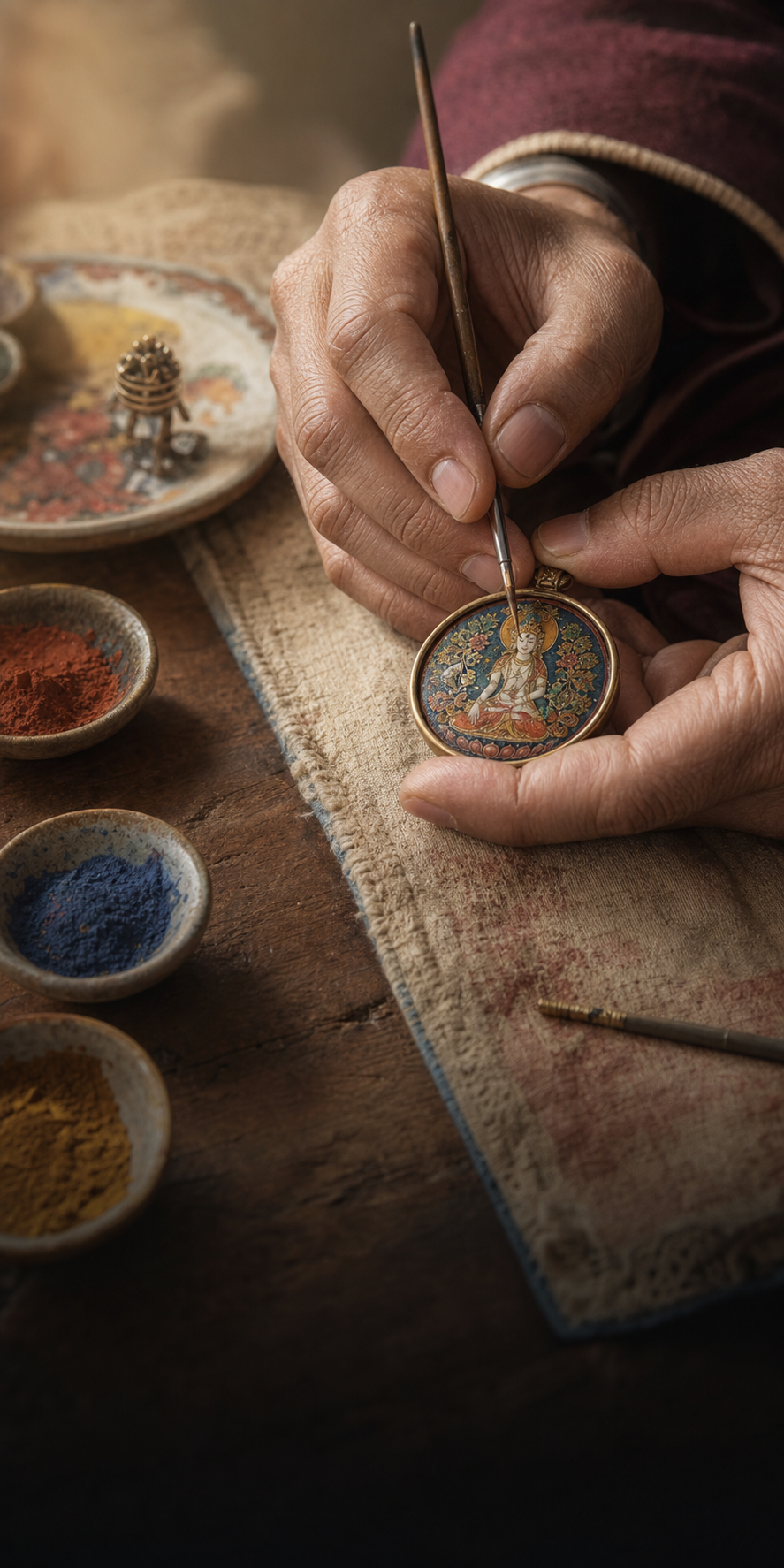
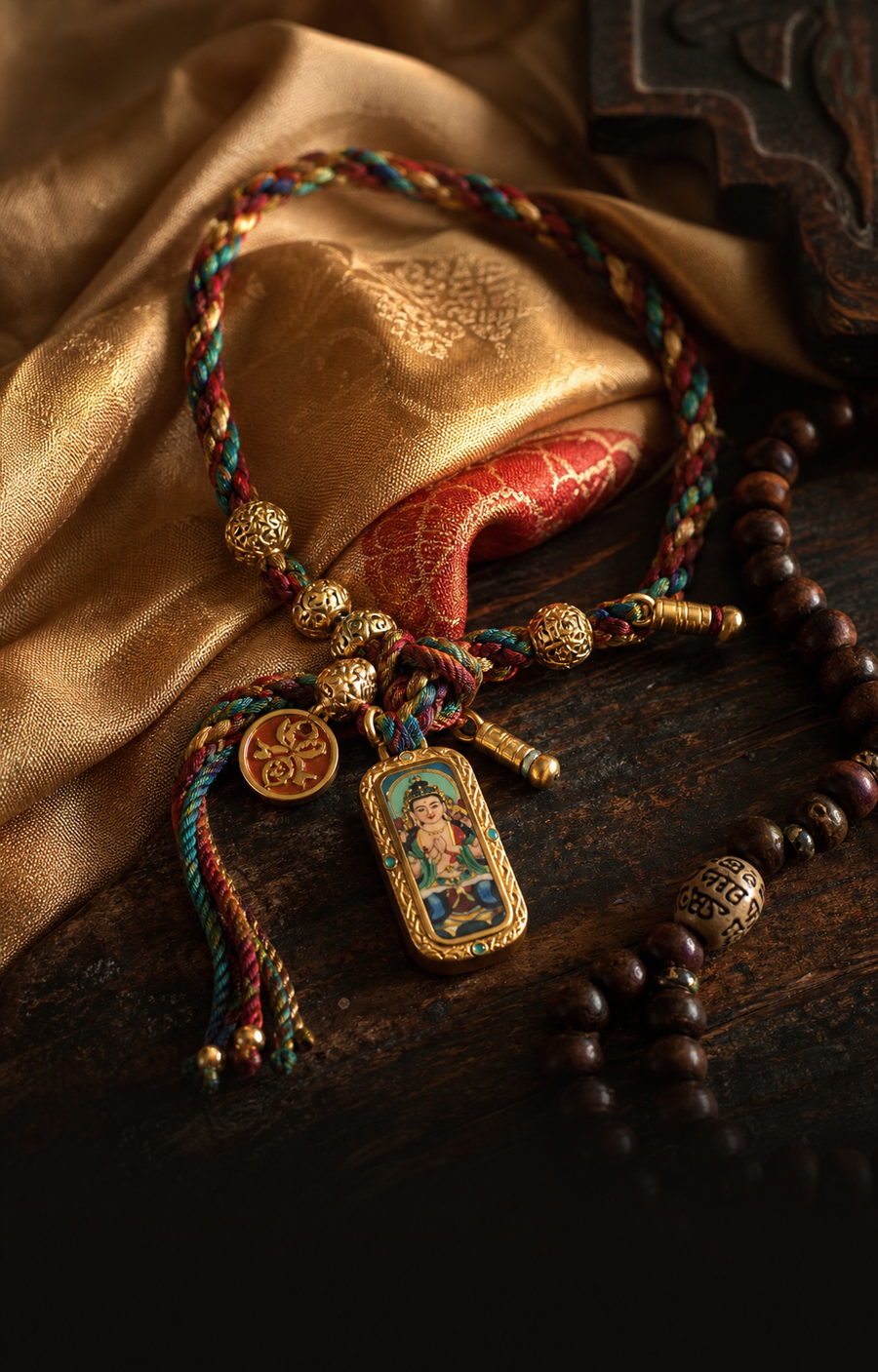
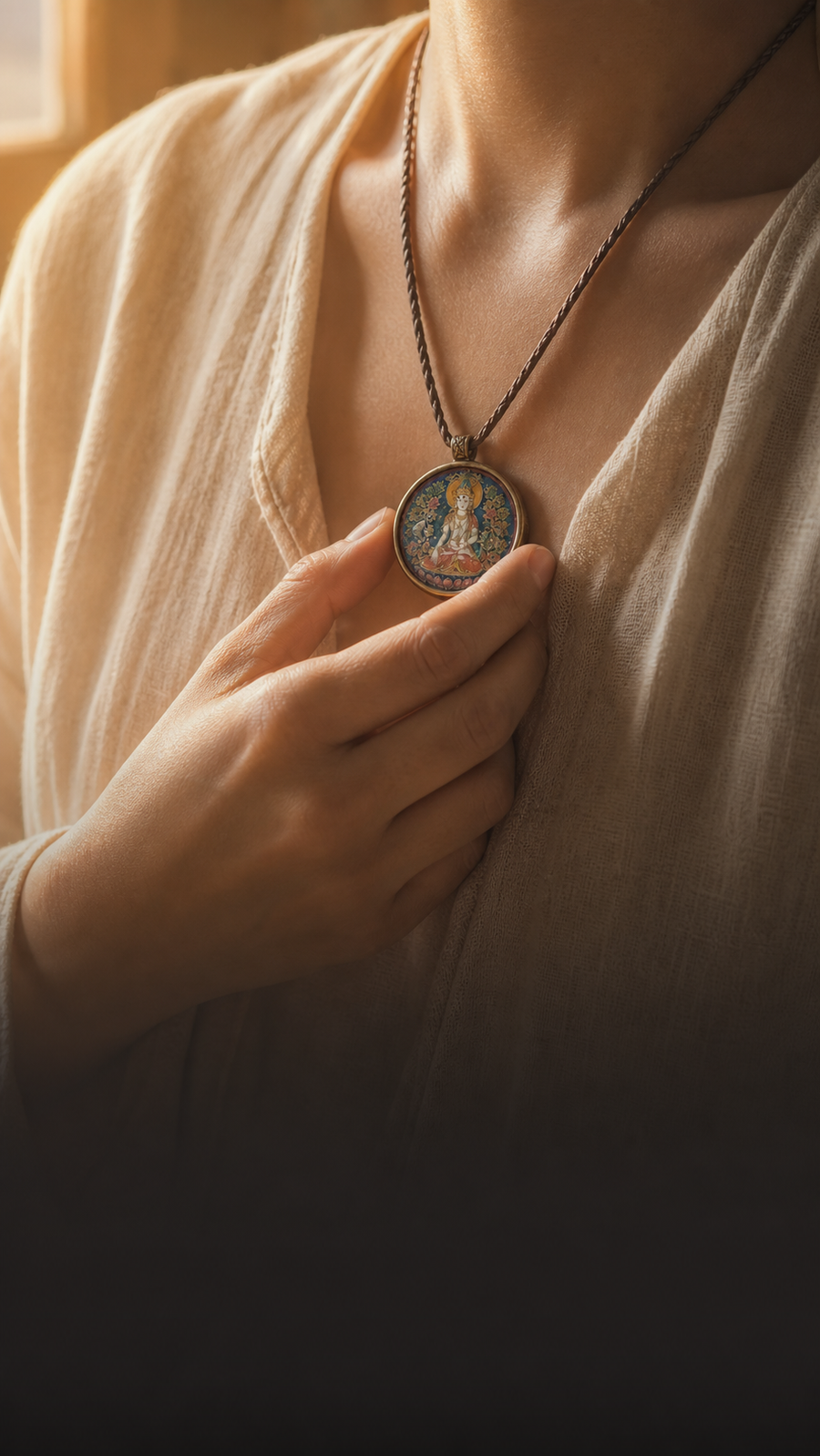
 Ksitigarbha — Hand-Painted Tsatsa Thangka Pendant, Deluxe (3D Relief)
Wear the Symbol