The sword in Manjushri’s hand is not raised against a person. Its opponent is confusion: the habits, assumptions, and fear that make reality difficult to see.
Origins and tradition
Manjushri is one of the earliest and most important bodhisattvas of Mahayana Buddhism. Sanskrit texts present him as the youthful embodiment of prajna—wisdom that understands things deeply rather than merely collecting facts. In famous dialogues he asks questions that expose contradictions, and sometimes answers with a silence more exact than speech. His devotion traveled from India into Nepal, Tibet, China, Korea, and Japan. Mount Wutai in northern China became his great pilgrimage mountain, imagined as a place where wisdom could appear in unexpected forms.
The story behind the symbol
A beloved story tells of a pilgrim at Mount Wutai who treated a poor woman harshly when she arrived at a religious gathering with two children and a dog. As she departed, she revealed herself as Manjushri. The lesson is sharper than a miracle tale: scholarship without kindness has missed the truth it claims to serve. Manjushri’s wisdom is tested in the ordinary encounter, especially when appearances invite judgment.

How to recognize this figure
He is commonly golden or orange and eternally youthful. His right hand lifts a flaming sword, while his left holds the stem of a blue lotus supporting the Prajnaparamita, or Perfection of Wisdom, scripture. The sword cuts ignorance; its flames suggest a knowledge alive enough to transform. The book preserves reflective wisdom. Together they warn against two extremes: action without understanding and learning without action.
What blessings are traditionally associated?
Traditionally, Manjushri is associated with wisdom, memory, learning, eloquence, clear judgment, and success in study. Students and writers may seek his blessing, but so may anyone facing a difficult decision. His deeper gift is not always a quick answer. It is the courage to identify the real question, separate evidence from fear, and revise a cherished opinion when truth requires it.
Who might wear this symbol?
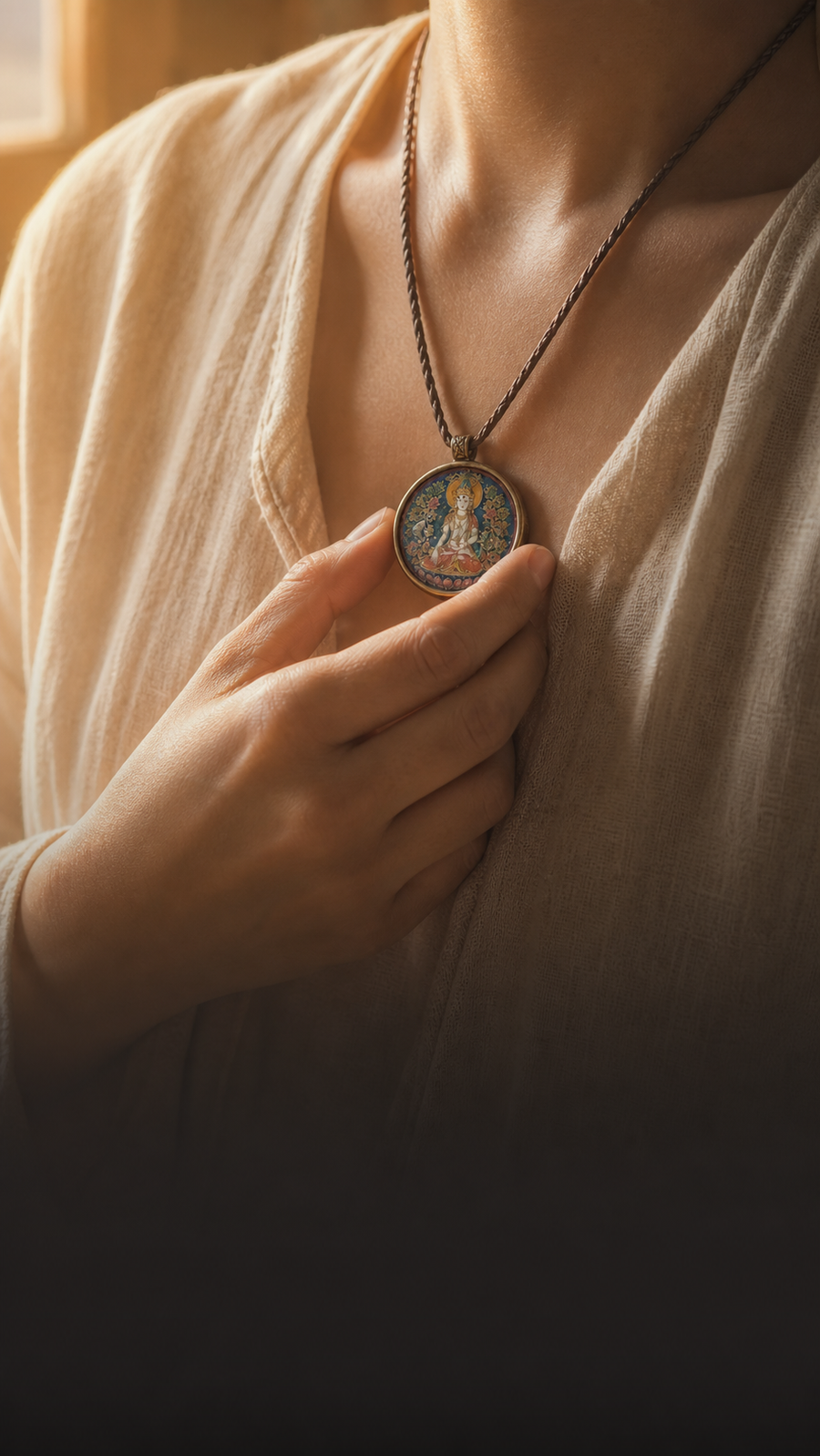
Manjushri is meaningful for students, teachers, writers, researchers, and people navigating complicated choices. Wear him as a reminder to pause before reacting and to use clarity without cruelty. A sharp mind becomes wisdom only when compassion guides the blade.
Cultural note: interpretations vary across Buddhist lineages and local communities. This introduction explains traditional symbolism and does not promise supernatural, medical, or financial results.
Carry This Symbol
Explore pieces featuring the figure from this story.
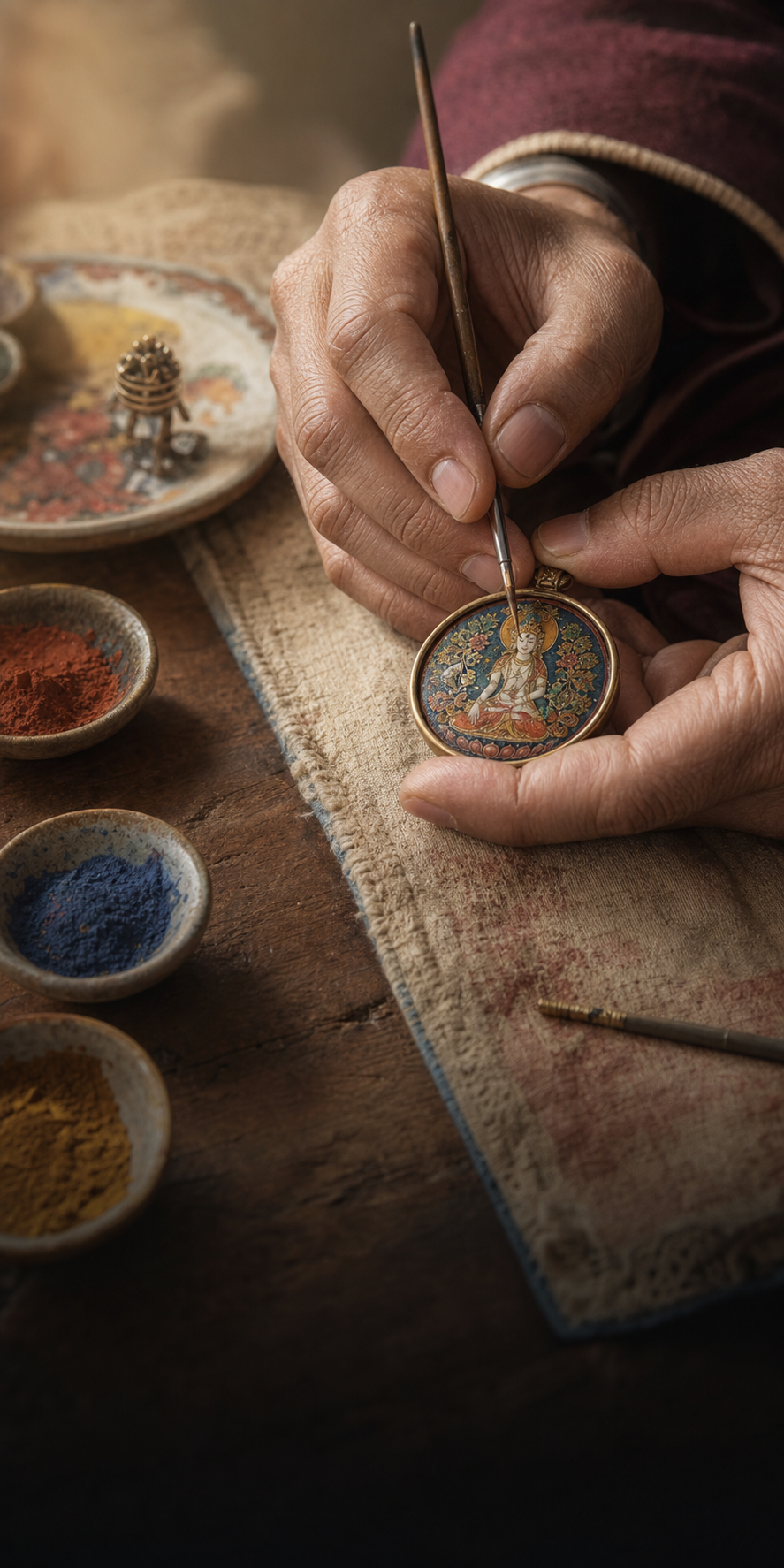
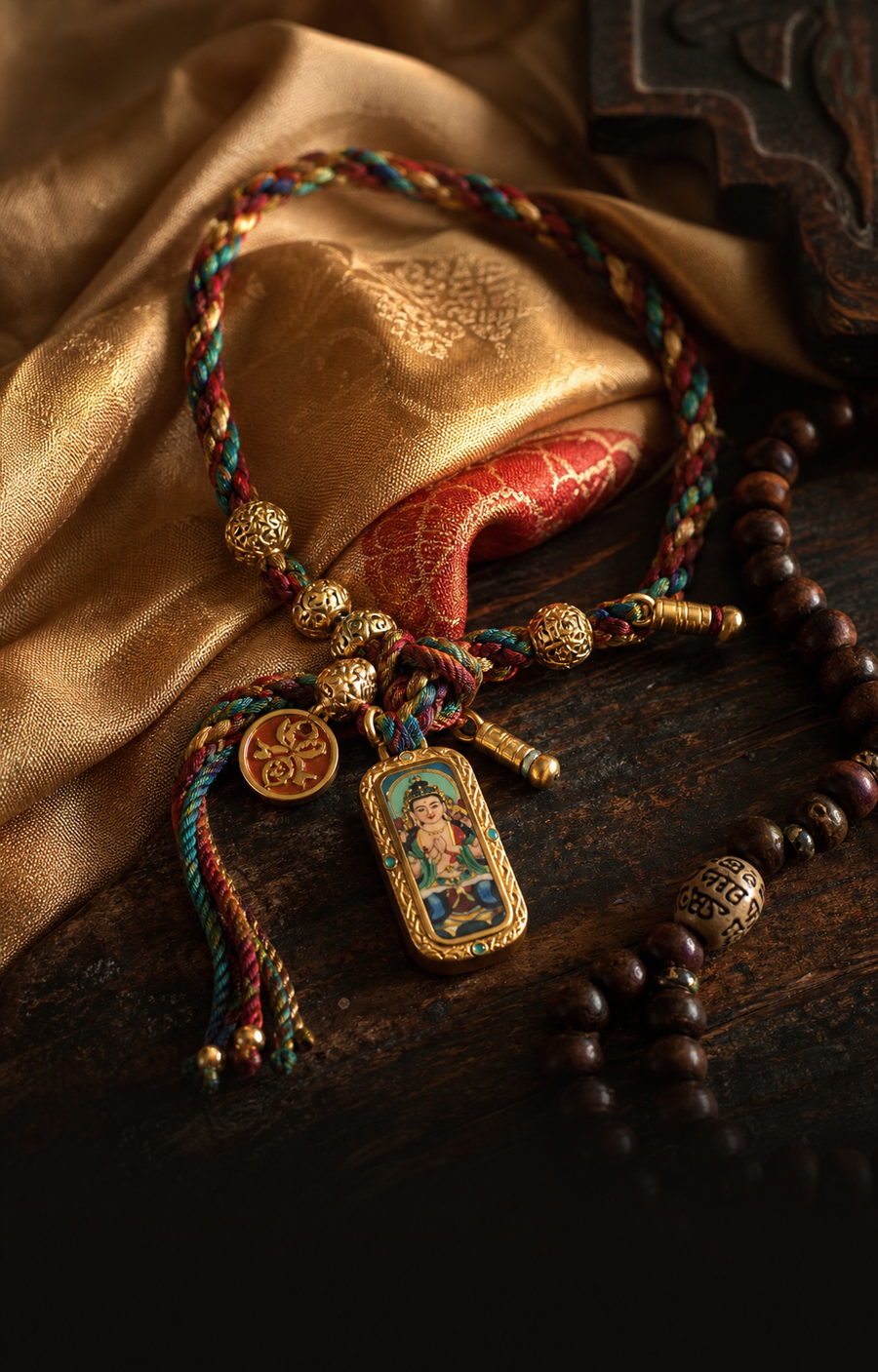
 Manjushri — Hand-Painted Tibetan Thangka Pendant (3D Relief)
 Manjushri — Hand-Painted Thangka Pendant, Full Color (2D)
 Manjushri — Mini Tibetan Thangka Pendant (3D Relief)
Wear the Symbol
Shop every Manjushri piece
 Manjushri — Titanium Steel Pendant Necklace (2D)$20.99
 Manjushri — Mini Tibetan Thangka Pendant (2D)$12.99
 Manjushri — Hand-Painted Thangka Pendant, Full Color (2D)$49.99
 Manjushri — Hand-Painted Tibetan Thangka Pendant (3D Relief)$43.99
 Manjushri — Hand-Painted Gilded Thangka Charm Bracelet (2D)$10.99
 Manjushri — 3D Hand-Painted Tsatsa Relief Thangka Pendant$43.99
 Manjushri — Hand-Painted Tsatsa Thangka Pendant, Deluxe (3D Relief)$49.99