Samantabhadra is what happens after inspiration. He represents the patient work of turning a beautiful intention into conduct repeated day after day.
Origins and tradition
The name Samantabhadra means Universal Worthy or All-Good. In East Asian Mahayana Buddhism he forms a celebrated triad with Shakyamuni Buddha and Manjushri: Manjushri embodies wisdom, while Samantabhadra embodies the practice that gives wisdom a life. He is especially important in the Avatamsaka, or Flower Ornament, tradition and in the closing chapter commonly known as the Practices and Vows of Samantabhadra.
The story behind the symbol
The text presents Ten Great Vows: honoring awakened beings, praising their qualities, making offerings, acknowledging harmful actions, rejoicing in others’ goodness, requesting teaching, asking wise guides to remain, learning continuously, benefiting beings, and dedicating merit. The list moves from admiration to participation. It refuses to let spirituality remain a private feeling.

How to recognize this figure
Samantabhadra is often shown riding a white elephant with six tusks. The elephant represents enormous strength made calm and trainable; the six tusks are commonly related to the six perfections of generosity, ethical conduct, patience, effort, meditation, and wisdom. His peaceful posture above that great animal suggests mastery without domination.
What blessings are traditionally associated?
Traditionally he is associated with worthy action, ethical commitment, fulfilled vows, generosity, and perseverance in practice. His symbolism is useful whenever enthusiasm fades. A promise is not proved by how strongly it was felt on the first day, but by the small act that still appears on the hundredth.
Who might wear this symbol?
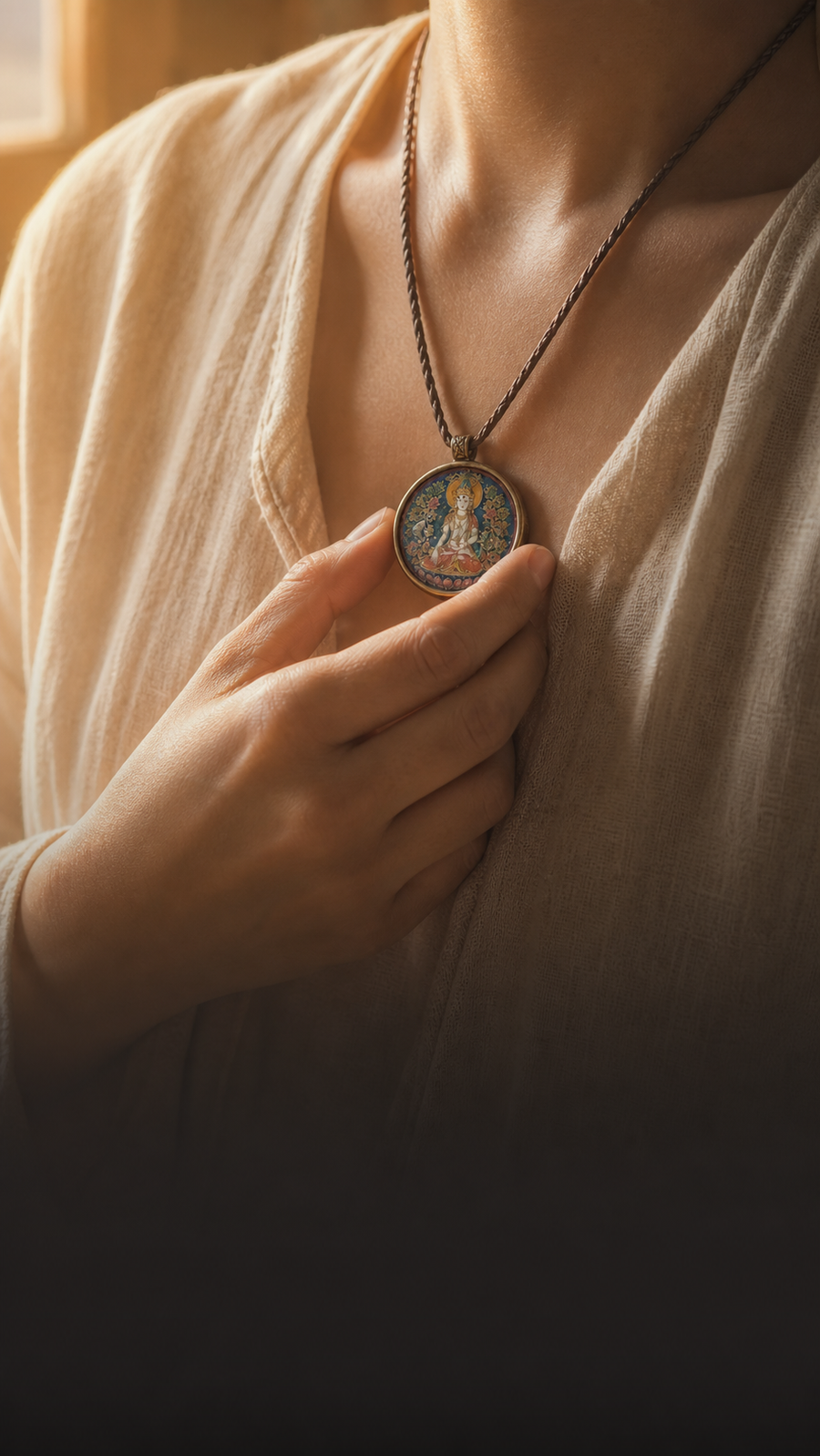
Samantabhadra suits someone building a habit, keeping a promise, serving a community, or transforming values into work. Wear him as a quiet accountability partner: not ‘What do I believe?’ alone, but ‘What will I practice today?’
Cultural note: interpretations vary across Buddhist lineages and local communities. This introduction explains traditional symbolism and does not promise supernatural, medical, or financial results.
Carry This Symbol
Explore pieces featuring the figure from this story.
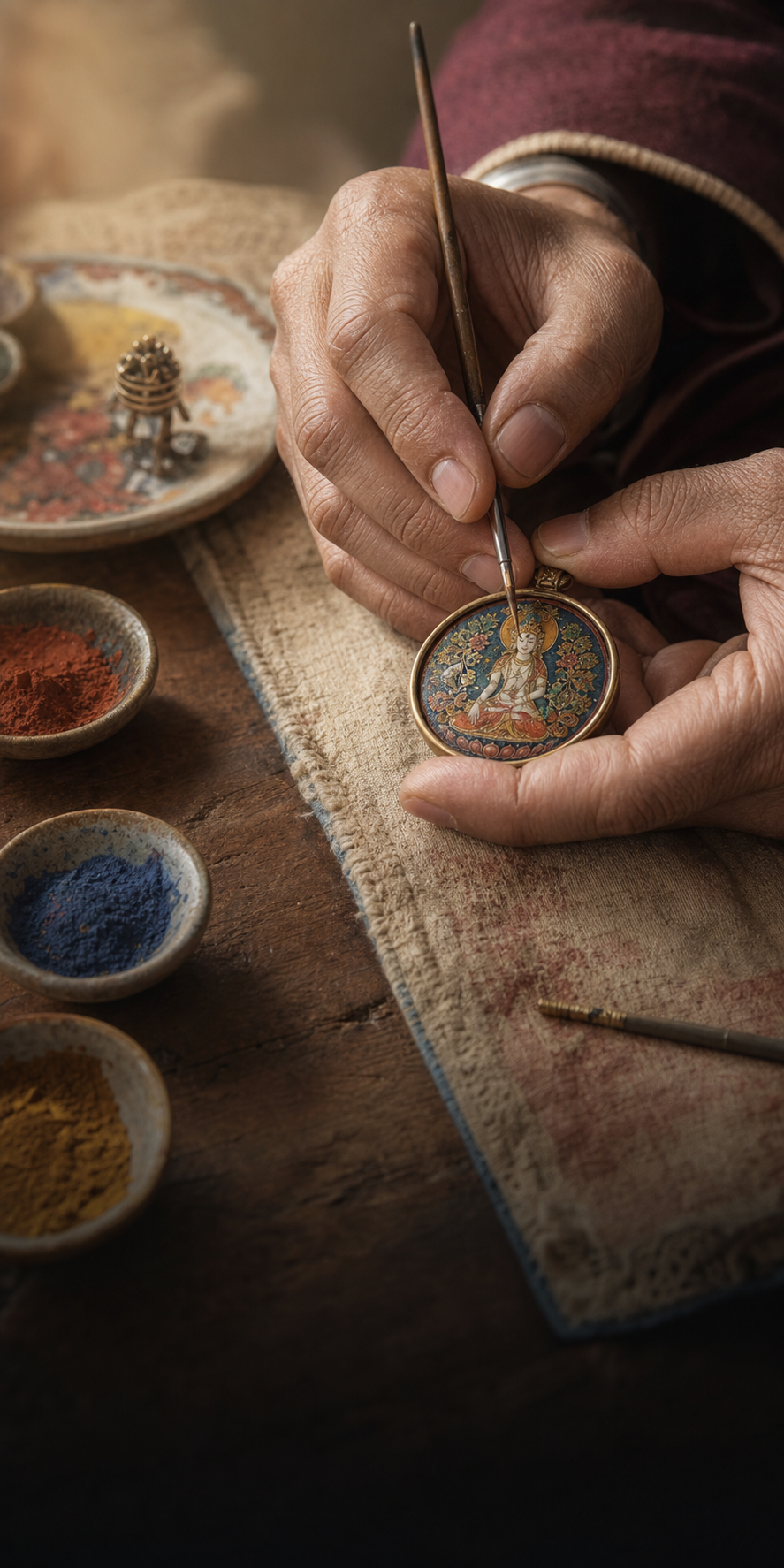
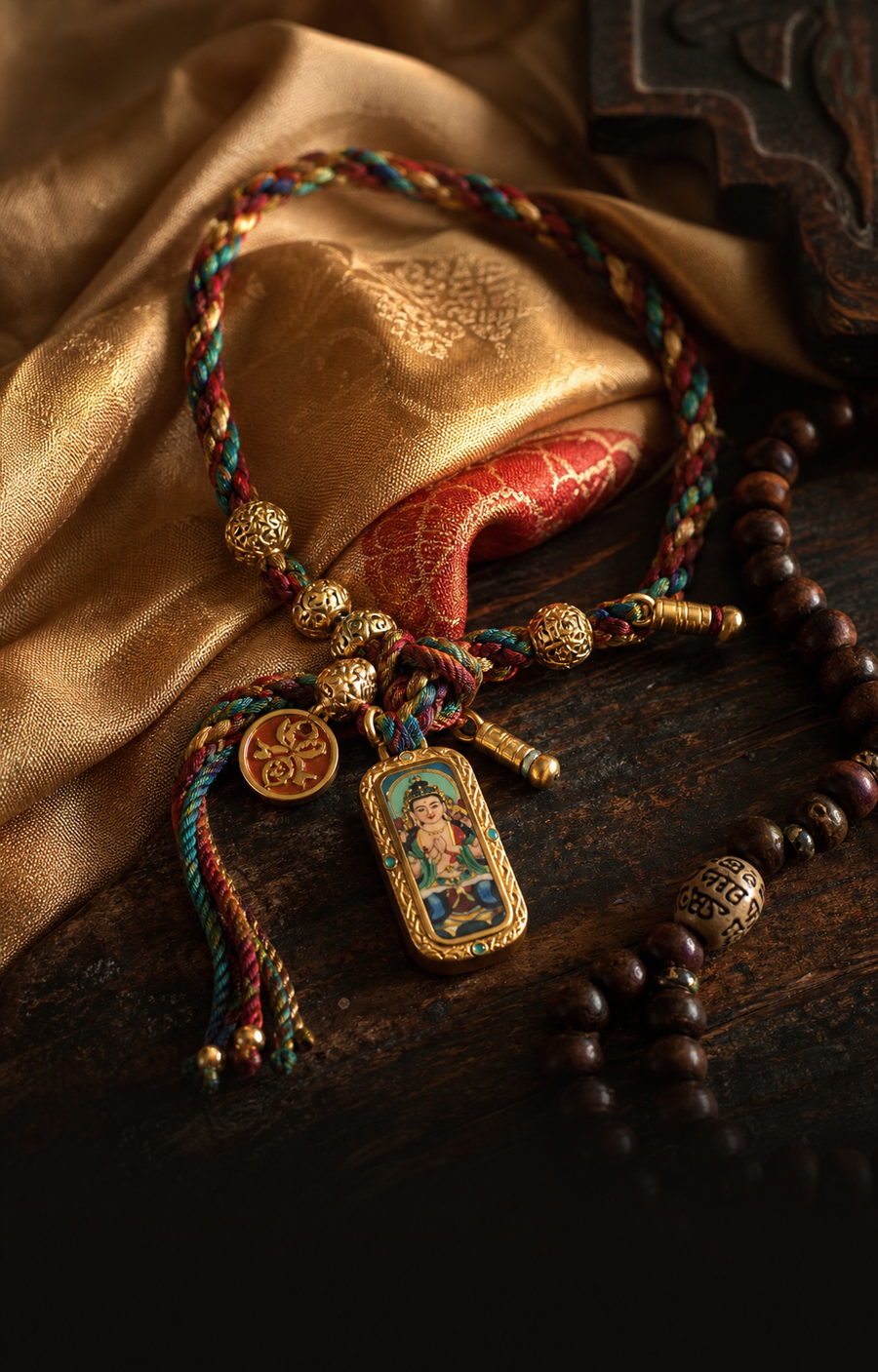
 Samantabhadra — Hand-Painted Tibetan Thangka Pendant (3D Relief)
 Samantabhadra — Hand-Painted Thangka Pendant, Full Color (2D)
 Samantabhadra — Mini Tibetan Thangka Pendant (3D Relief)
Wear the Symbol
Shop every Samantabhadra piece
 Samantabhadra — Mini Tibetan Thangka Pendant (2D)$12.99
 Samantabhadra — Titanium Steel Pendant Necklace (2D)$20.99
 Samantabhadra — Hand-Painted Gilded Thangka Charm Bracelet (2D)$10.99
 Samantabhadra — Hand-Painted Thangka Pendant, Full Color (2D)$49.99
 Samantabhadra — Hand-Painted Tibetan Thangka Pendant (3D Relief)$43.99
 Samantabhadra — Hand-Painted Tsatsa Thangka Pendant, Deluxe (3D Relief)$49.99