He looked at the suffering of the world, believed he had failed, and broke apart. The story of Thousand-Armed Avalokiteshvara begins not with invincibility but with compassion overwhelmed.
Origins and tradition
Avalokiteshvara is the great bodhisattva of compassion. Multi-armed forms emerged from Indian Mahayana and tantric traditions and spread across Asia. In Tibet, the form with eleven faces and one thousand arms became one of the most powerful images of limitless compassionate activity. Artistic depictions often show forty principal arms, each standing for twenty-five, creating the symbolic total of one thousand.
The story behind the symbol
According to a famous Tibetan account, Avalokiteshvara vowed not to rest until every being was free. When he saw suffering continue despite his efforts, despair shattered his body. Amitabha Buddha restored him with eleven faces to look in every direction and a thousand arms to reach those he could see. The legend does not shame exhaustion. It imagines compassion returning in a larger, more distributed form.

How to recognize this figure
The faces rise in tiers, peaceful below and sometimes wrathful near the top, crowned by Amitabha. The many hands fan around the body; an eye may appear in each palm to unite awareness with action. Central hands meet at the heart, while others hold implements representing different forms of help. Precision varies across artistic traditions, but multiplicity is always the message.
What blessings are traditionally associated?
Devotees associate this form with protection, mercy, relief from suffering, and the capacity to help many beings. Today the image also speaks to collective care. No single person has a thousand hands, but communities do. Asking for assistance and sharing responsibility may be the most faithful response to overwhelm.
Who might wear this symbol?
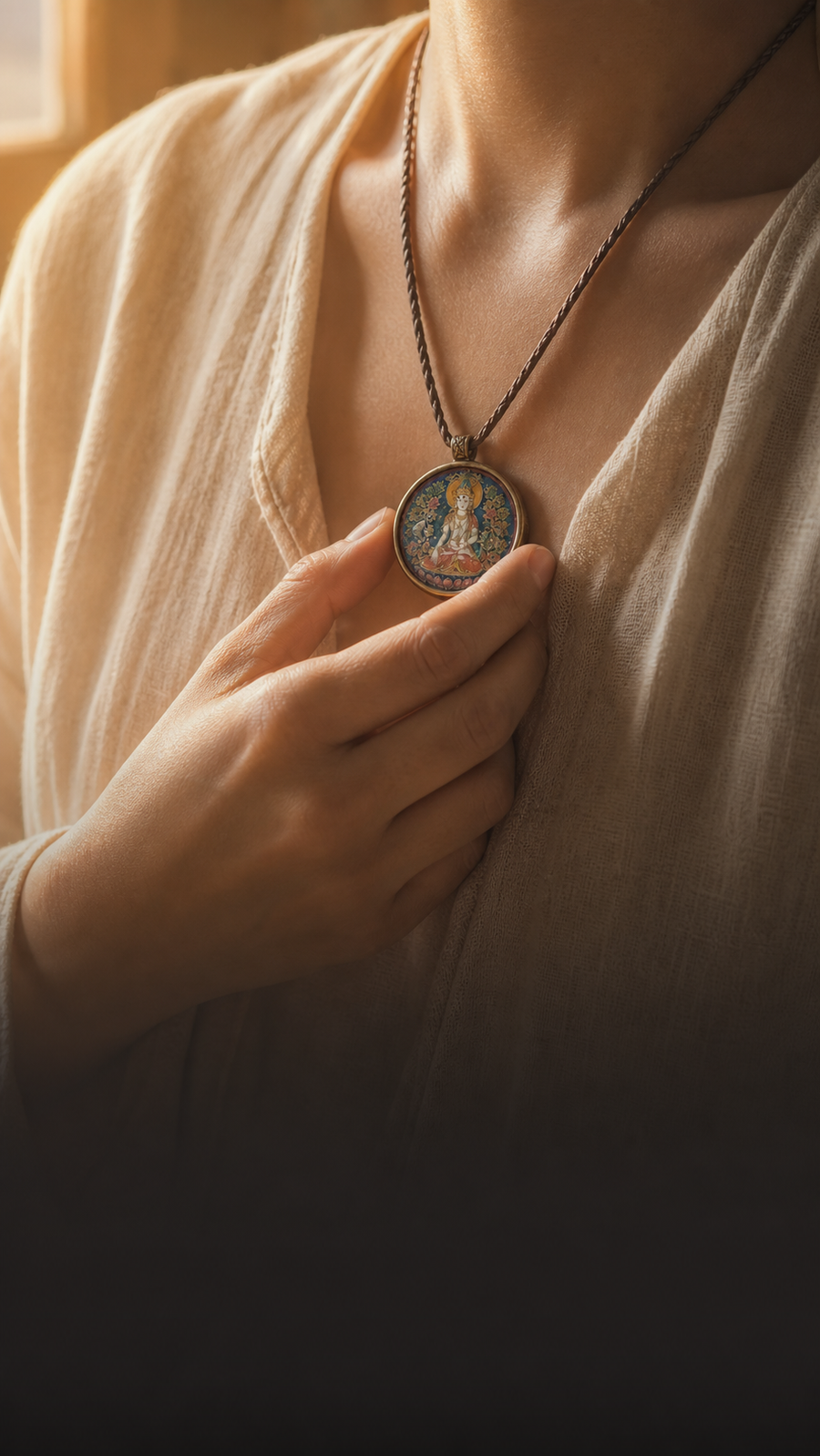
This symbol is meaningful for caregivers, organizers, parents, medical workers, and anyone learning that compassion needs a network. Wear it as a reminder that breaking under the weight of caring is not the end of the story; help can return through many hands.
Cultural note: interpretations vary across Buddhist lineages and local communities. This introduction explains traditional symbolism and does not promise supernatural, medical, or financial results.
Carry This Symbol
Explore pieces featuring the figure from this story.
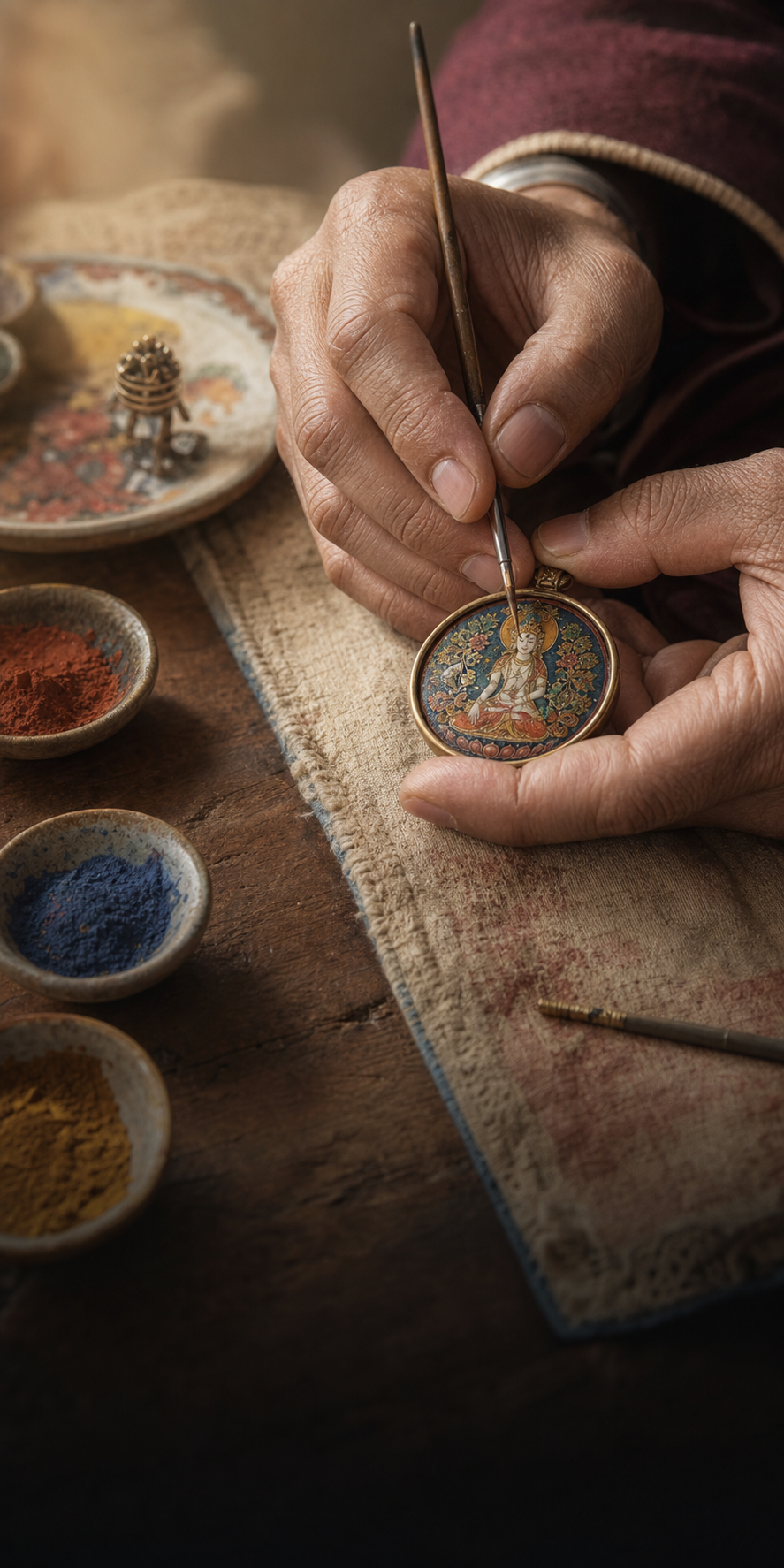
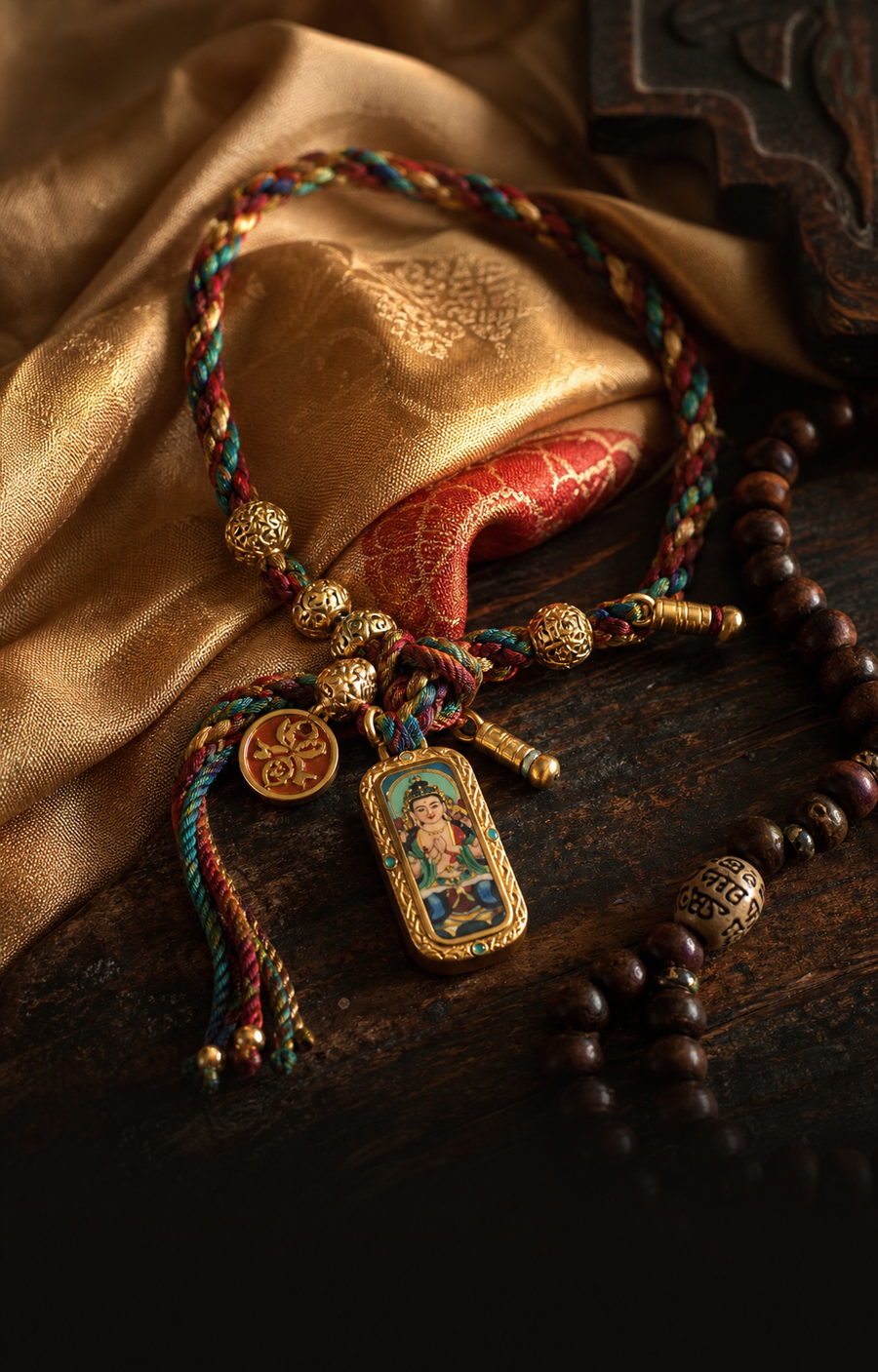
 Thousand-Armed Avalokiteshvara — Hand-Painted Thangka Pendant, Full Color (2D)
Wear the Symbol