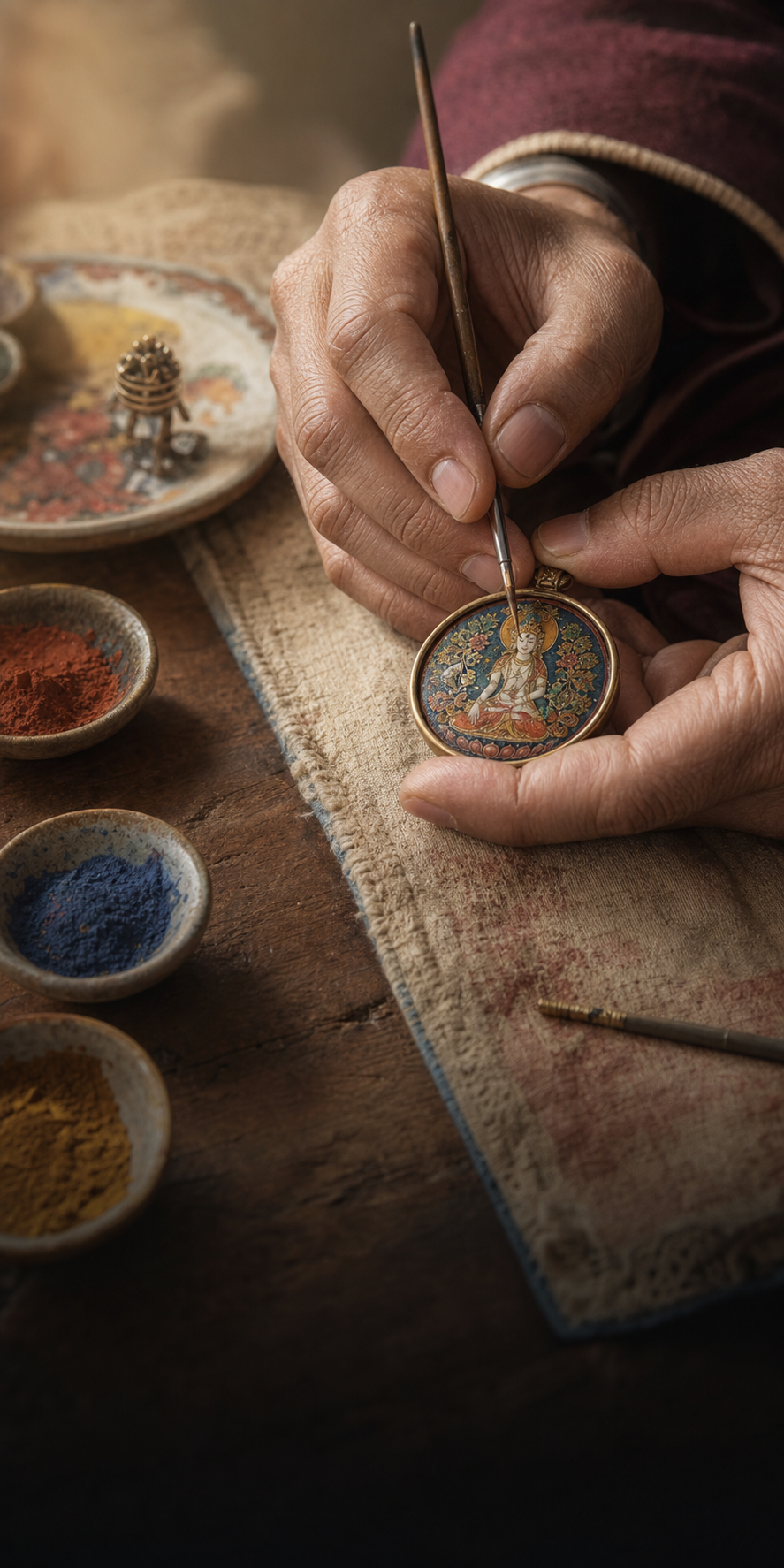
White Tara sees with more than her face. In her best-known form, eyes appear on her forehead, palms, and soles as well as in their ordinary place. Seven eyes do not make her strange; they make her attentive. Wherever she reaches and wherever she steps, awareness is already there.
Who is White Tara?
White Tara is a peaceful form of Tara closely associated with longevity, healing, and the restoration of life’s vital strength. Like Green Tara, she belongs to a broad family of Tara traditions that developed in Indian Buddhism and became especially important across the Himalayan world. Different lineages preserve different White Tara practices, but the seven-eyed form—often called the Wish-Fulfilling Wheel—is the one most viewers recognize.
Her white color is compared in traditional descriptions to an autumn moon or a flawless crystal. Rather than emptiness, white suggests completeness: all colors gathered into clear light. She sits in full meditation posture, unlike Green Tara’s ready-to-rise pose. If Green Tara is the courage to move, White Tara is the patience to remain present through a long recovery.
The meaning of the seven eyes
Her third eye represents wisdom that looks beyond appearances. The eyes in her palms suggest compassionate action guided by awareness; the eyes on her soles suggest mindful movement. Together they form a beautiful proposition: seeing is not something the mind does alone. Our actions and direction must also be awake.
Seven has additional layers across Buddhist cultures, but the immediate visual lesson needs no codebook. White Tara notices suffering from every angle. She does not look away simply because healing is slow.

A story of long life
White Tara became strongly connected with prayers for longevity and with practices dedicated to teachers, loved ones, and communities facing illness or danger. In Himalayan Buddhist history, long-life images were sometimes commissioned as offerings for respected masters. ‘Long life’ was never only a wish for more years. It meant preserving the time, clarity, and conditions needed to benefit others.
This gives her symbolism unusual depth. Endurance is not stubborn survival at any cost. It is caring for the vessel through which meaningful work can continue.
What blessings are associated with White Tara?
Traditionally she is invoked for longevity, healing, protection, peace, and the replenishment of depleted vitality. Contemporary wearers may understand these blessings as resilience, careful attention, patience with the body, and tenderness during recovery. Spiritual practice can support meaning and emotional steadiness, but it should accompany—not replace—qualified medical care.
Who might wear her?
White Tara can be meaningful during recovery, caregiving, grief, burnout, or any period that demands gentle persistence. She is often chosen as a thoughtful gift for someone beginning again after illness or exhaustion. Wear her as a reminder that healing is not always dramatic. Sometimes it is the quiet decision to care for life one more day.
Cultural note: traditional beliefs differ among lineages. This article does not claim that jewelry prevents illness or extends life.
Carry This Symbol
Explore pieces featuring the figure from this story.
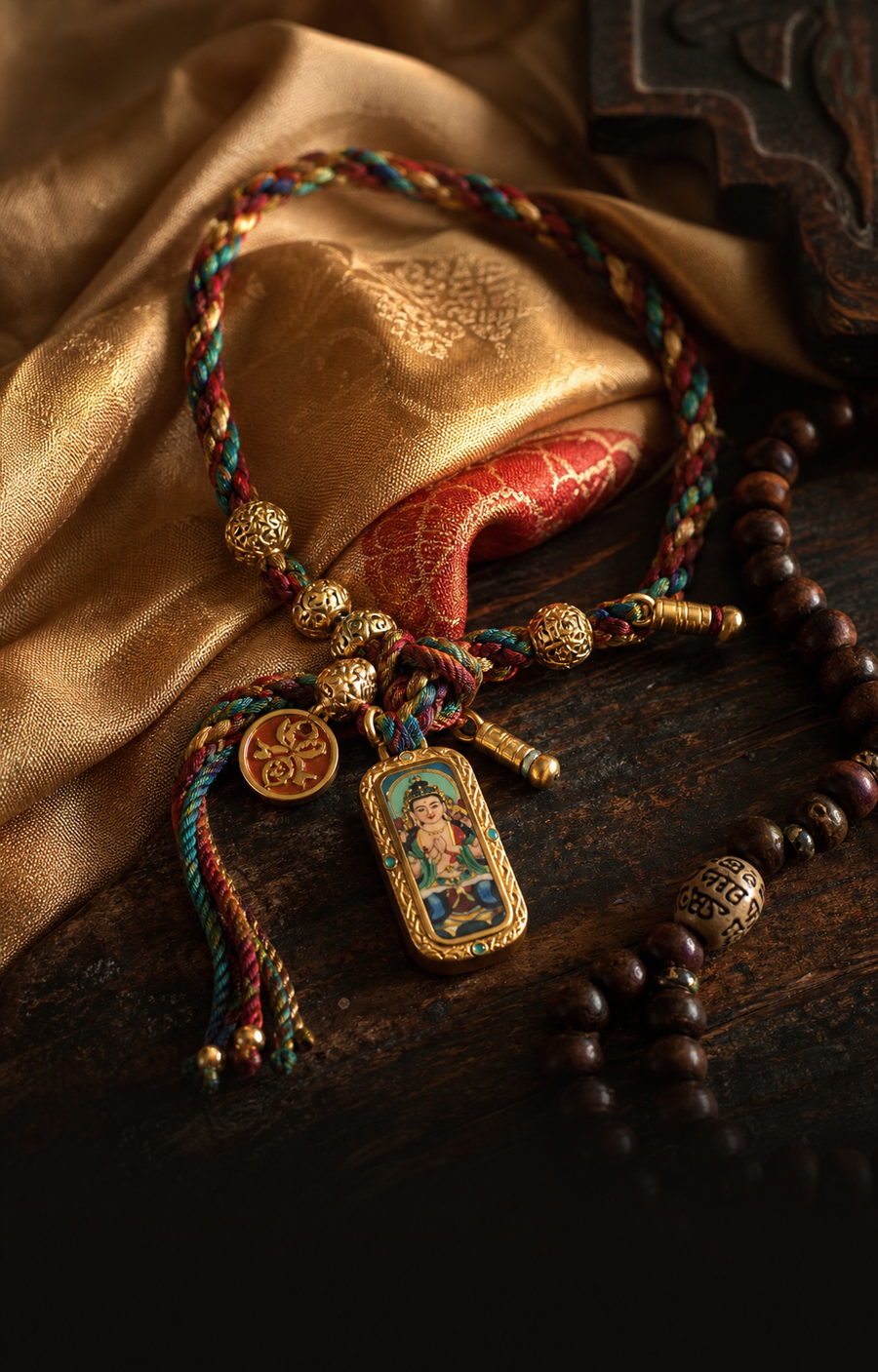
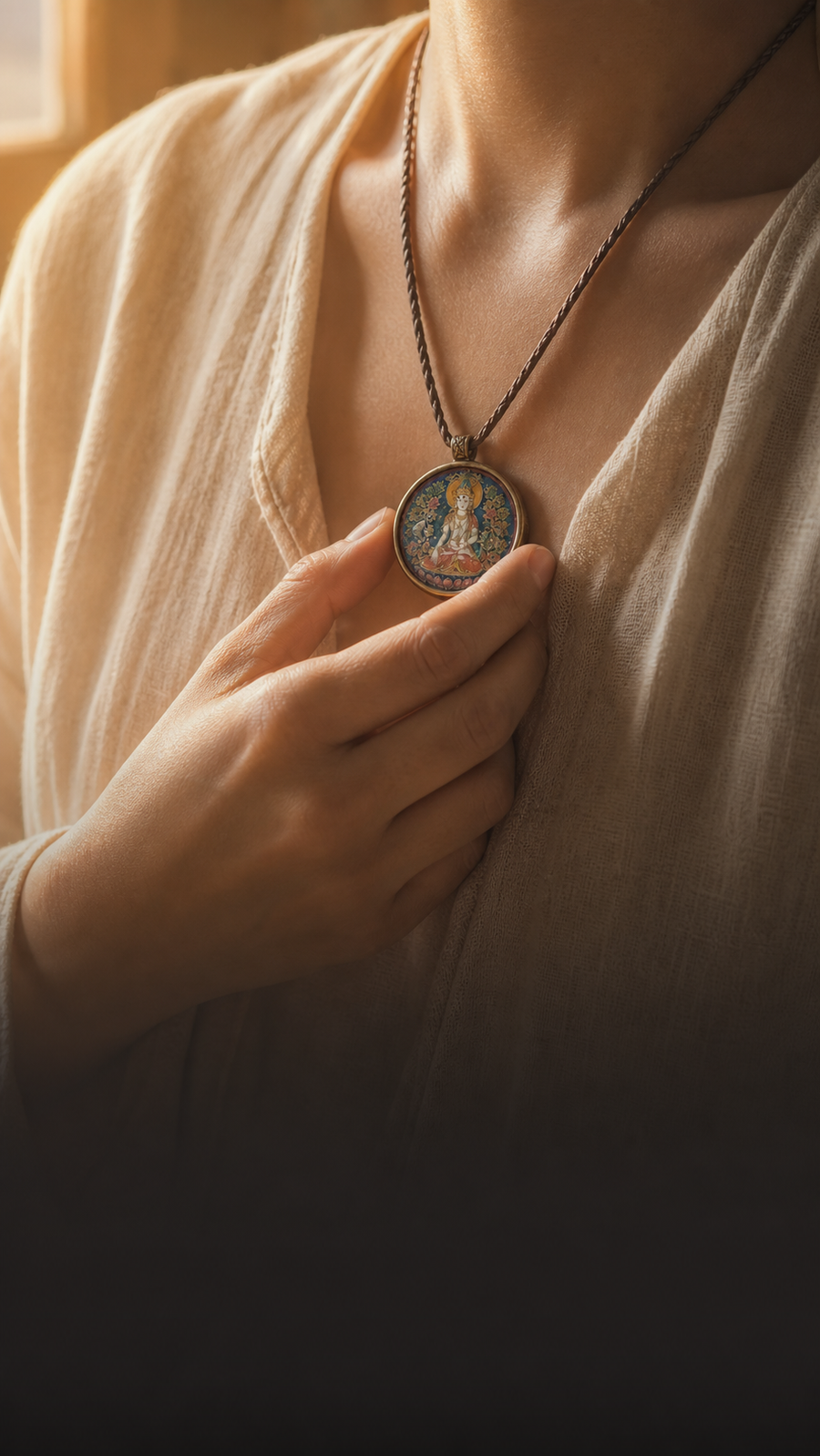
 White Tara — Hand-Painted Tibetan Thangka Pendant (3D Relief)
Wear the Symbol